The MNCH Anthropological Collections Online Database
Northern Great Basin Archaeological Perishables
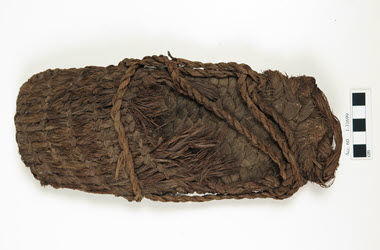
The Northern Great Basin Archaeological Perishables Collection of more than 3000 artifacts represents the antiquity of basketry and other organic artifacts in the Northern Great Basin, with an archaeological record spanning 14,000 years.
The Archaeological Perishables Collection of more than 3000 artifacts represents the antiquity of basketry and other organic artifacts in the Northern Great Basin, with an archaeological record spanning 14,000 years. Artifacts of stone and other durable materials are the most common cultural items to survive in archaeological sites. Fiber, hide, wood and other "perishable" materials preserve only in exceptional conditions, such as perpetually dry caves and rockshelters. The most diverse, abundant, and ancient examples of basketry and other perishable artifacts in the world are found in the Desert West of North America.
The Northern Great Basin of Oregon was home to the Klamath-Modoc and Northern Paiutes. Although southeast Oregon was mostly the domain of Northern Paiute bands historically, archaeological and ethnographic evidence indicate that most of this territory was controlled by ancestral Klamath-Modoc in ancient times. The Owyhee Uplands and and Catlow Valley of far eastern Oregon also show evidence of influences from the east; a reflection of the historic Bannock who spoke a Northern Paiute language but intermingled with the Shoshone of southern Idaho and eastern Nevada. To the north, speakers of Sahaptian languages (Warm Springs/Tenino, Umatilla, Walla Walla, and Nez Perce) dominated the southern Columbia Plateau.

The Museum of Natural and Cultural History's collection of perishable artifacts from the Northern Great Basin includes thousands of items, most in remarkably sound condition, preserved by the extreme dryness of Oregon's desert caves. Artifact classes with enough individual objects to support meaningful quantitative study include twined basketry, matting, twisted fiber cordage, and woven sandals. The famous Fort Rock style sandals represent the world's oldest known footwear. In addition to fiber arts, the collection contains a large number of wooden artifacts. Arrow and atlatl dart shafts show details of fletching, hafting, and nocking, and foreshafts and knife handles retain evidence of the sinew and mastic that held knives and points in place. Other wooden artifacts include fire drills and hearths, atlatls and bows, snare parts for the taking of small game, fire-hardened digging sticks, and framing elements of wickiup structures.
Beyond utility, these objects shed light on creativity in Native culture. Decorative embellishments on fiber and wood objects reflect the artistry and care of their makers, and games, toys, and musical instruments speak to us as humans sharing the same basic feelings and needs. Mending and patching illuminate a time when all accessories were produced “by hand” and not casually discarded.
A majority of these items were recovered in the early 20th century, or without record of their depositional context, so their true age is often only approximated or unknown. An ongoing, cooperative radiocarbon-dating program between the Museum of Natural and Cultural History, the U.S. Bureau of Land Management, the Nevada State Museum, and the University of Nevada, Reno, has dated hundreds of fiber artifacts from the northern and western Great Basin, ranging in age from more than 12,500 years old to recent times.
Acknowledgements
The object identifications in this catalog originated with work undertaken by the museum in 1984-1985, funded by a grant from the National Science Foundation. Digitization has been generously supported by grants from the Bureau of Land Management and the museum's Sandal Society. Fiber artifacts were identified by museum staff; Steve Allely identified wood artifacts from Catlow and Roaring Springs caves. Images © UO Museum of Natural and Cultural History.
Native American Ethnographic Basketry
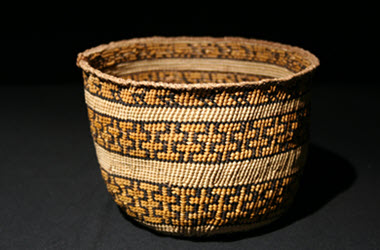
The Native American Ethnographic Basketry Collection of more than 1900 baskets represents the technological and artistic achievements of diverse peoples and cultures from the 1800s to the present.
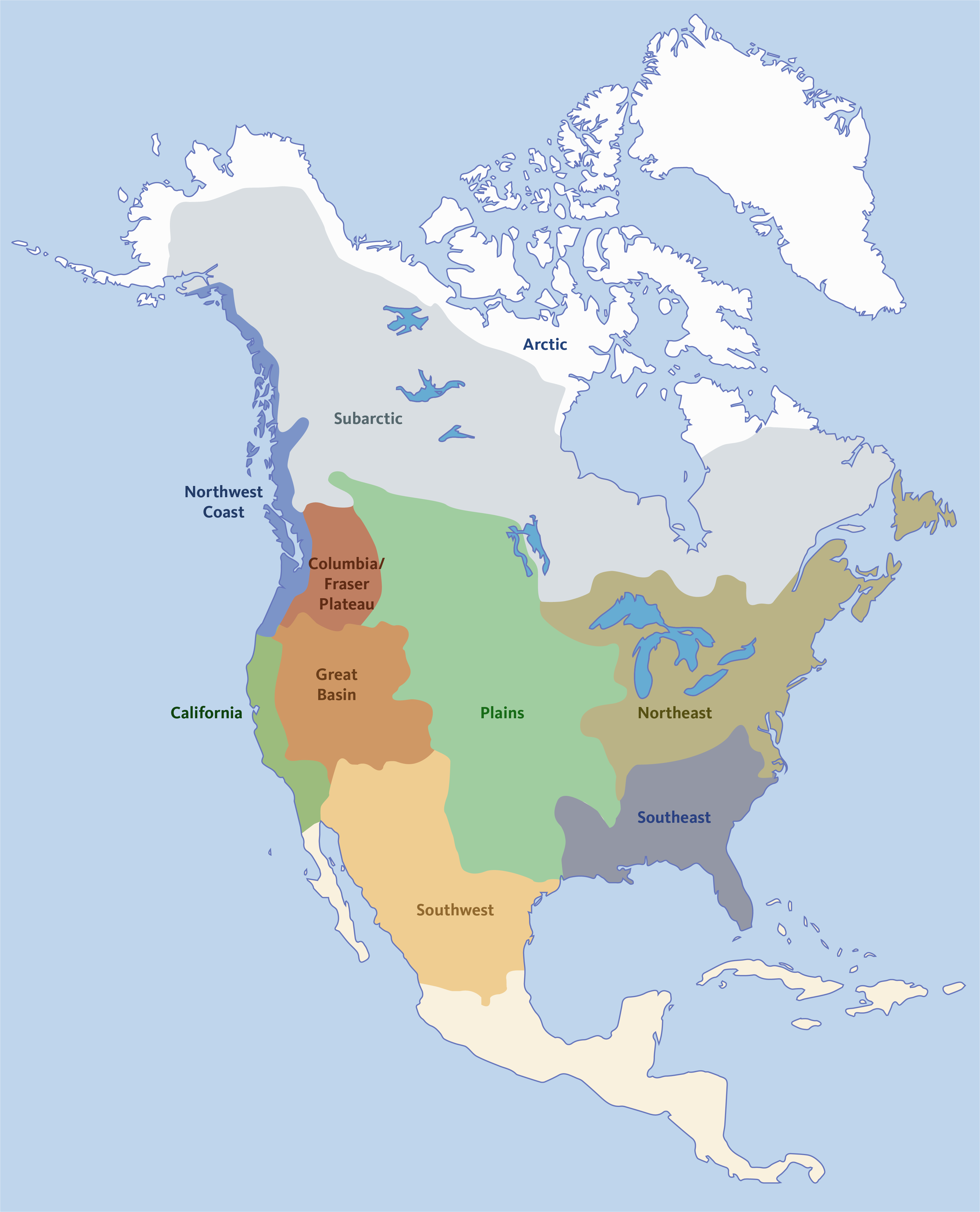
The Native American Ethnographic Basketry Collection includes more than 1900 baskets, representing the technological and artistic achievements of diverse peoples and cultures from the 1800s to the present. About half are from the Pacific Northwest (including Northwest Coast, Arctic, and Subarctic), a quarter from the Columbia-Fraser Plateau, 13% from California, and smaller numbers from the Great Basin, Southwest, Northeast, and of undetermined origin. More than a third are from Oregon, including 380 from western Oregon. While many of the baskets are more than a century old, modern pieces are being acquired, as funds allow, to showcase contemporary Native American artists. Baskets are on display in the Museum’s central exhibit, Oregon–Where Past is Present. They are a focus of MNCH’s ongoing documentation efforts, and regularly draw Tribal members to the museum for study.
Basketry is a traditional craft that Indigenous People continue to make — for food gathering, preparation, and storage, for clothing (hats, leggings), baby cradles, ceremonies, and celebrations, and as carrying containers and made-for-sale works of art. Basket weaving begins with the gathering of plants and requires traditional knowledge about native plant management, collecting, and processing. Many native plants are represented in the MNCH collection, including bear grass, cattail, cedar, and dogbane. Commercially available materials point to weavers’ artistic innovations and changing sociopolitical landscapes. During the Reservation Era of the mid-1800s, access to and management of native plant gathering areas was significantly reduced. This, coupled with the tourist market in the 1880s-1930s, saw the introduction of new designs and materials. Non-native materials include raffia, cornhusk, hemp, wool, linen, cotton, commercial string, and synthetic aniline dyes. See the List of Plants Used in Basketry under “Advanced Search” for a comprehensive list of taxa used in MNCH basketry.
Descriptive content for the baskets was derived from associated archives, catalog records, and museum staff identifications. Plant materials were identified macroscopically. Basketry information includes weaving techniques and styles (such as twining, coiling, and plaiting), native plants and other materials used in making the baskets, cultural affiliation, and geographic region. Artist or maker’s name is included when known. This information can be queried using the Keyword Search tab and the Advanced Search tab. See the Glossary of Key Words for definitions of basketry techniques and styles and the List of Cultural Groups for cultural designations and associated geographic areas. A Generalized Map of Culture Areas is included below for reference. The online database continues to be updated, and we welcome feedback for this ongoing effort.
Acknowledgements
This project was generously supported by grants from the Oregon Parks and Recreation Department and the museum's Sandal Society. We gratefully and respectfully acknowledge contributions by the late Gordon Bettles, enrolled member of The Klamath Tribes; Stephanie Craig (née Wood), Santiam and Yoncalla Kalapuya, Takelma Rogue River, Cow Creek Umpqua, Clackamas Chinook, Iroquois, enrolled member of the Confederated Tribes of Grand Ronde; and Margaret Mathewson, Ph.D. Photography by Roger Scott, Allison Fischer-Olson, and museum staff. Images © UO Museum of Natural and Cultural History.
The museum is located on Kalapuya ilihi, the traditional homeland of the Kalapuya people. We honor the Native history of the Willamette Valley and the Indigenous People who continue to call it home.